
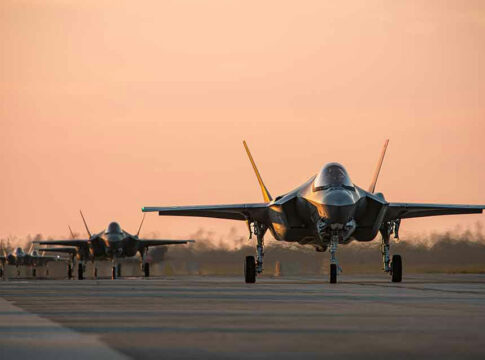
Netanyahu’s warning about a possible U.S. F-35 sale to Turkey exposes a wider fight over Middle East air power, alliance politics, and Israel’s security edge.
Quick Take
- Benjamin Netanyahu said Turkey should not get F-35 jets or engine technology.
- He argued the sale would upset the Middle East balance of power.
- U.S. officials are still reviewing whether Turkey can rejoin the F-35 program.
- The dispute reflects a long-running clash between Israel’s security concerns and NATO ties.
Netanyahu’s warning lands in the middle of a new U.S. review
Netanyahu used a Fox News interview to press the Trump administration against selling F-35 jets to Turkey, saying Ankara should not receive the aircraft or the engines. He tied his warning to Turkish President Recep Tayyip Erdogan’s hostility toward Israel and to Turkey’s support for Hamas. He also said the sale would upset the balance of power in the Middle East.
The Israeli leader framed the issue as more than a normal arms deal. He pointed to Turkish rhetoric he described as openly hostile, along with disputes involving Cyprus and Greece. He argued that Turkey’s behavior makes advanced stealth aircraft too risky to transfer. The articles in the research package report those claims as his stated position, not as independently verified findings.
Why the F-35 fight matters beyond Turkey and Israel
The controversy is part of a broader pattern in U.S. policy. Israel has often fought advanced weapons sales to other regional states when it believes its qualitative military edge is at risk. The research package notes that past disputes over F-35 sales to the United Arab Emirates and Saudi Arabia raised the same question: how to balance Israel’s military advantage with broader U.S. goals.
That tension now runs into Turkey’s case. U.S. Vice President J.D. Vance said a legal review is underway to see how Turkey could comply with American law and return to the F-35 program. Other reports say the Trump administration is moving ahead with a $700 million engine sale tied to Turkey’s KAAN fighter project. Those steps show that Washington is not treating Turkey’s bid as a closed issue.
What is proven, and what is still an open question
Netanyahu’s case is politically sharp, but the research does not provide an independent military study showing that Turkish F-35 access would “destroy” the regional balance. It does show that U.S. officials are weighing the sale, while Israeli officials argue that any transfer could weaken Israel’s long-held edge. That gap leaves the debate shaped by strategy, trust, and politics more than hard public data.
Netanyahu says US F-35 jet sale to Türkiye would 'destroy' Mideast power balance
Trump says he will lift Turkey sanctions, decide on selling F-35s pic.twitter.com/SyFITuCrKl— MARIA ORFANIDOU (@destiny48245n) July 7, 2026
The fight also highlights a familiar problem in American foreign policy. Arms sales can serve industry goals, NATO ties, and short-term diplomacy at the same time they unsettle allies that fear a shift in power. For readers on the right and left, that can look like another case where major decisions are made far from public view, while the risks are left to smaller states to absorb.
Sources:
insiderpaper.com, foxnews.com, jpost.com, timesofisrael.com, ynetnews.com, algemeiner.com, instagram.com, youtube.com, facebook.com, trtworld.com, warontherocks.com, washingtoninstitute.org, airuniversity.af.edu, reddit.com, en.wikipedia.org, nslj.org
Turkey is NOT a true ally. Turkey was warned by Washington to NOT purchase the Russian air defense system, but they ignored multiple warnings. Actually, Turkey seems more aligned with the axis powers so let them rest with their choice… China, Russia, Iran, North Korea and probably even India.