
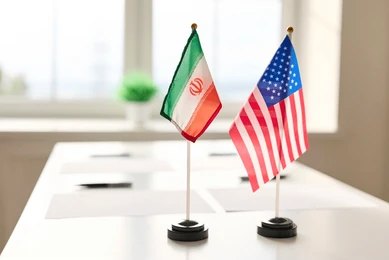
Iran’s nuclear talks are drawing sharp scrutiny because Washington says progress was made, while Tehran is still denying the deal is real.
Quick Take
- Vice President JD Vance said Iran agreed to invite International Atomic Energy Agency inspectors back into the country.[1]
- Iranian semi-official media pushed back and said no such inspection approval had been made.[3]
- Vance also said talks ran past 1:00 a.m. and did not break down despite walkout threats.[1][2]
- U.S. officials described broader steps on Hormuz security and future de-escalation.[4][6]
What Washington Says Happened
Vice President JD Vance said the Switzerland talks produced a major step toward stopping Iran from building a nuclear weapon. He said Iran agreed to invite International Atomic Energy Agency inspectors back into the country, and he called that “a major milestone” for the American people.[1][5] He also said the talks were not derailed, even after threats that Iran might walk out.
Vance said the Iranian technical team stayed engaged well past 1:00 a.m., which he described as proof that the talks kept moving.[1][2] He also said conversations with inspectors could begin quickly, possibly within days. Supportive coverage from other outlets repeated the same core U.S. claim, including that Iran had agreed to let inspectors return and that the talks made real progress.[3][8]
Why Iran’s Denial Matters
The problem is that Iran has not clearly confirmed Vance’s account. Tasnim News Agency, a semi-official Iranian outlet, reported that the Iranian negotiating team or responsible officials did not approve the entry of International Atomic Energy Agency inspectors.[3] That direct denial leaves a basic question unanswered: whether the U.S. is describing a real agreement, or only a political understanding that still needs Tehran’s final approval.
That gap matters because Iran has a long record of using talks as leverage while keeping its real limits vague. Earlier analysis on U.S.-Iran negotiations says both sides often issue public statements that sound close to a deal while core disputes remain unresolved.[12][15][16] In plain terms, Washington may be calling this a breakthrough, but Tehran’s own reporting suggests the fine print is still very much in dispute.[11][12]
What Else Was Reported From the Talks
Beyond the inspector fight, Vance said the talks produced a mechanism to keep the Strait of Hormuz open and reduce the chance of escalation.[4][6] He also said the broader effort included coordination on mine removal and other security steps in the waterway.[6] Those details matter because the Strait of Hormuz is one of the world’s most important shipping routes, and any disruption can hit energy prices fast.
This is a major developments out of the U.S.-Iran high-level peace talks in Bürgenstock, Switzerland.
Vice President JD Vance made the announcement following the first round of face-to-face negotiations, calling the invitation to the International Atomic Energy Agency (IAEA) a…— Bluegrass AI Distractions (@AkBluegrass3) June 22, 2026
Vance also said Iran’s unfrozen assets could be used to buy American farm goods, and one report said the Treasury Department temporarily eased oil sanctions as part of the opening phase of the talks.[4][6] That may help U.S. producers, but it also shows how wide the bargain has become. The issue is no longer just nuclear inspections. It now touches sanctions, regional security, and control over a strategic shipping lane.[6][12]
Why Conservatives Are Watching Closely
For conservatives, the core concern is simple: Iran has spent years testing American patience, and any deal that lacks hard verification could be sold as victory before it is proven. Vance’s words suggest a firm U.S. posture, but Iran’s denial keeps the outcome uncertain.[1][3] Until inspectors are actually back on the ground, and until Tehran accepts real limits, the public should treat claims of success with caution.
Sources:
[1] Web – “You close it … you won’t even make it back to your f—ing …
[2] YouTube – JD Vance says Iran has Agreed to Invite IAEA Inspectors …
[3] YouTube – JD Vance TORCHES Iran; Tehran agrees to IAEA inspections
[4] Web – Iran will let UN nuke inspectors back in, could buy US …
[5] Web – Vance touts agreements on open Hormuz Strait, IAEA …
[6] Web – Iran agrees to invite IAEA inspectors back, says US
[8] YouTube – US eases oil sanctions as Vance, Iranian officials end first …
[11] Web – Iran and U.N. Watchdog Reach Agreement to Resume Nuclear …
[12] YouTube – Rafael Grossi Calls It ‘Step in the Right Direction’
[15] Web – IAEA Director General’s Introductory Statement to the Board of …
[16] Web – Statement by IAEA Director General on Iran