
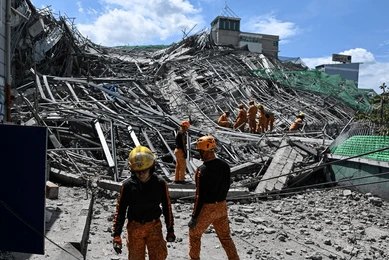
Almost 3,000 people are now officially dead after Venezuela’s twin earthquakes, yet tens of thousands of families still cannot get a straight answer on how many loved ones are truly gone.
Story Snapshot
- Official death toll has jumped from a few dozen to nearly 3,000 in less than two weeks.
- Missing persons lists and satellite data suggest the real human cost may be far higher.
- Confusing numbers, political tension, and weak institutions fuel distrust of the government’s reporting.
- Global rescue efforts show what can work when politics step back and basic duty takes over.
How the Official Death Toll Climbed Toward 2,954
Venezuelan officials first reported only 32 deaths and about 700 injuries after the June 24 earthquakes, even as major buildings lay in rubble across Caracas, La Guaira, and nearby states. Within a day, the health minister raised the count to around 235 dead and 4,300 injured as hospitals filled up. By June 26, a government spokesperson admitted more than 900 deaths and about 3,000 injured, and warned that the numbers would keep climbing as rescuers reached collapsed neighborhoods.
By June 29, National Assembly president Jorge Rodríguez announced at least 1,719 deaths and 5,034 injured, plus more than 15,800 people left homeless. United Nations (UN) briefings repeated those figures but stressed they were still “provisional” as rubble removal and body recovery continued. On July 2, new official tallies shared on social media raised the death toll to 2,295 and injuries to over 11,200, with reports that the figure had since moved closer to 2,954 as more remains were identified.
Why People Doubt the Numbers
Families and outside experts are not only grieving; they are asking why the count has jumped from 32 to nearly 3,000 while so much basic information remains unclear. There is still no confirmed national list of missing people, even though opposition groups and local volunteers say more than 6,600 people are unaccounted for and some reports of missing reach tens of thousands. International media outlets like CNN and Reuters repeatedly describe the official toll as “remarkably low” compared with the scale of destruction on the ground.
That gap looks even larger when you look at the physical damage. A NASA-linked satellite analysis estimates about 58,870 buildings were damaged or destroyed by the quakes. For many readers, it is hard to square tens of thousands of wrecked structures and entire blocks flattened with an official death toll still under 3,000. The United States Geological Survey’s early model even put the chance of 10,000 to 100,000 deaths at 44 percent, based on building weakness and shaking intensity, underscoring how far current figures may be from the final reality.
Politics, Weak Institutions, and a Pattern of Under‑Counting
These data problems fit a pattern seen in fragile states after big disasters, where early death counts often rise by ten to fifty times in the first week as more bodies are found and remote areas are reached. Venezuela entered this tragedy already deep in an economic and humanitarian crisis, with millions in need of aid and basic services. When hospitals lack staff, morgues overflow, and local officials fear punishment, it becomes even harder to track deaths carefully and report them honestly.
The Venezuelan government also has strong incentives to keep the toll looking “manageable.” Lower numbers can soften public anger over failed building codes and slow rescue work, and limit the political damage to President Nicolás Maduro’s already embattled rule. At the same time, the United States government’s hard line against Maduro and talk of capturing him adds another layer of mistrust, as some in Caracas fear outside help could come with hidden strings attached. For many Americans, this sounds familiar: a distant crisis where elites on every side seem to play games while regular families dig through rubble with bare hands.
Shared Anger on the Left and Right
For conservatives who are tired of global bodies, weak borders, and government waste, Venezuela’s disaster shows how a broken state fails its own people while leaning on the UN and foreign rescuers to fill the gap. For liberals worried about inequality, human rights, and the gap between rich and poor, it highlights how the most vulnerable—poor urban residents living in weak buildings—pay the highest price when basic safety and honest records are treated as optional.
Death toll from the June 24 double-earthquakes that hit Venezuela is almost 3,000. Now that the probability of anyone being alive in the 190 collapsed buildings is near zero, rubble can be cleared with heavy equipment and remains can be extracted. https://t.co/jdzyVvnP4D
— Diana Barahona (true name) (@dlbarahona) July 4, 2026
Across the spectrum, one lesson stands out: when a government does not explain its methods, preserve records, and invite independent audits of hospital and morgue data, trust collapses. The UN and human rights groups have clear tools for casualty recording, including verifying every source, tracking location and cause of death, and publishing transparent criteria. Yet so far, no full forensic audit of Venezuelan earthquake deaths has been done, leaving families, media, and foreign donors to guess where the truth lies between the official 2,954 and much higher feared totals.
What Needs to Happen Next
The way forward is not another round of slogans from any capital. It is careful work. International medical and forensic teams should be allowed full access to hospital admission logs, morgue records, and burial sites in Caracas, La Guaira, and Yaracuy to match names and numbers. A national missing persons registry, open to families and checked against crowdsourced lists, could turn scattered grief into a verified national record instead of leaving the dead and missing as political talking points.
High‑resolution satellite maps and engineering surveys already show where buildings fell; pairing those maps with local testimony can reveal which destroyed blocks still have no official count attached. For Americans watching from afar, this is a reminder that basic things—truthful numbers, clear roles, honest record‑keeping—are not “globalist” fads. They are the nuts and bolts of a government that works for its people when disaster strikes, instead of for the comfort of a small, protected elite.
Sources:
insiderpaper.com, facebook.com, cnn.com, reuters.com, news.un.org, aljazeera.com, en.wikipedia.org, youtube.com, nytimes.com, mynspr.org, diplomacyandlaw.com, linkedin.com, cdc.gov