
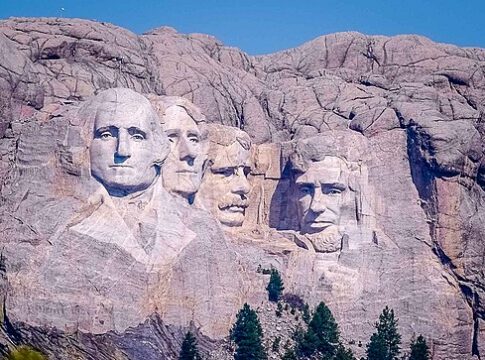
Standing beneath Mount Rushmore, President Trump told Americans that if you come to this country, you must embrace its values or choose a different system entirely.
Story Snapshot
- Trump used the Mount Rushmore stage to call the United States “the most exceptional nation ever to exist,” tying national pride to a clear choice between American values and communism.
- He urged citizens and newcomers alike to embrace founding ideals of liberty and equality, quoting Reverend Martin Luther King Jr. to argue that each generation must live up to a “promissory note” of American justice.
- Critics blasted the speech as divisive and polarizing, saying Trump weaponized patriotism and exaggerated threats to frame political opponents as enemies of the country.
- The clash over this speech reflects a deeper, shared frustration across right and left that elites in Washington talk about American values while many families still feel blocked from the American Dream.
Trump’s Mount Rushmore Message: Embrace American Values or Choose Another Path
President Donald Trump used his Mount Rushmore speech to draw a sharp line around what it means to be American, telling the crowd that the United States is “the most exceptional nation ever to exist” and that its values must be embraced by anyone who comes here. Speaking before the carved faces of George Washington, Thomas Jefferson, Abraham Lincoln, and Theodore Roosevelt, he linked patriotism to a clear choice, insisting that America would “never be a Communist country” under his watch.
Trump went further by framing the choice in stark moral terms, saying “you can be loyal to Karl Marx, or you can be loyal to America,” and “you can be a communist, or you can be a patriot, you cannot be both.” He described communism as a “mortal threat to American liberty” and “the greatest threat to our country,” ranking it above even major wars in American history. For many listeners worried about rising government control and global turmoil, this language echoed long-standing fears about losing freedom.
Founding Ideals, Martin Luther King Jr., and the Promise of American Exceptionalism
To defend his call for unity around shared values, Trump leaned heavily on the story of America’s founding and on the words of Reverend Martin Luther King Jr. He told the audience that the Founders launched “a revolution in the pursuit of justice, equality, liberty, and prosperity,” arguing that these ideals make the country unique. Citing King’s famous “promissory note” metaphor, Trump said the Founders signed a promise to every future generation, and that today’s Americans must choose to live up to that promise rather than tear down their heritage.
Trump also praised the four presidents on Mount Rushmore as “men of action” and “great men of history,” presenting them as symbols of American courage and achievement. He said Americans had pursued a “Manifest Destiny” that carried the nation across oceans, wilderness, mountains, and even into the stars. This version of American exceptionalism matches a long tradition in politics, where leaders claim that the United States is uniquely devoted to democracy, liberty, and self-government and therefore has a special mission in the world.
National Garden of American Heroes and the Battle Over How History Is Told
As part of his message, Trump pointed to his executive order creating a “National Garden of American Heroes,” a planned monument meant to honor a wide range of historical figures and counter claims that America’s story is mainly one of oppression. He promised that Mount Rushmore “will never be desecrated” and that the heroes carved into the mountain “will never be disgraced,” signaling that the federal government would defend traditional monuments against activists who want them removed or reinterpreted.
Trump’s stance spoke directly to many conservatives who feel that schools and media now focus more on America’s sins than its achievements, and who see attacks on statues as attacks on the country itself. At the same time, many liberals heard his words as erasing real history about stolen land, slavery, and discrimination that still affects people today. This fight over which heroes we honor and which stories we teach fits a broader pattern: leaders from Ronald Reagan to Barack Obama have turned debates over American exceptionalism into political battles whenever the country faces social or demographic change.
Critics, Media Reaction, and Growing Distrust of the Political Class
Major media outlets such as The New York Times quickly labeled Trump’s Mount Rushmore speech “grim and polarizing,” saying he launched a “full-scale cultural conflict” against a distorted picture of the political left. Commentators on YouTube channels like MeidasTouch called the address “dangerous” and “factually inaccurate,” focusing on his claims about communism, foreign policy, and economic success. They argued that Trump used fear of communism and talk of enemies within to fire up supporters rather than to genuinely unite the country.
I can’t recall the last time I heard that a communist won an election.
But I *can* state with quite a lot of confirmation that an idiot did.Trump uses Mount Rushmore speech to warn of a “mortal threat” from communism – South Dakota Searchlight https://t.co/VuxbI7pgUh
— A Giant Sequoia (@TheSierraTree) July 4, 2026
Even as critics challenged Trump’s facts and motives, their pushback did little to ease the deeper anger many Americans feel toward the federal government itself. On the right, older conservatives see the speech as a needed defense of freedom against globalism, woke agendas, and reckless spending. On the left, older liberals hear it as a cover for harsh immigration policies, shrinking safety nets, and rising inequality. Yet both sides increasingly share one core belief: elites in Washington talk endlessly about American values while everyday citizens struggle to afford housing, raise families, and build a future, making the promise of that “promissory note” feel distant and delayed.
Sources:
facebook.com, rev.com, youtube.com, trumpwhitehouse.archives.gov, nytimes.com, whitehouse.gov