
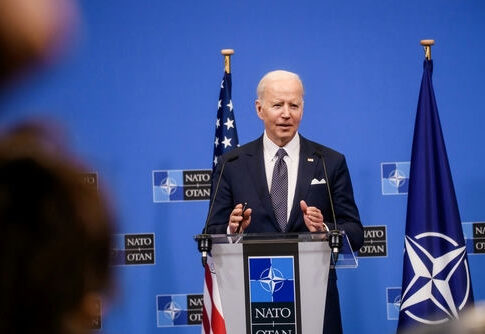
Europe entered the Ankara NATO summit with a bigger defense bill, but also with a harder test: turning money into real military power.
Quick Take
- All 32 NATO members met or exceeded the alliance’s 2 percent defense spending goal in 2025.
- European allies and Canada increased defense spending by 20 percent in 2025, according to NATO.
- The Hague summit set a new 5 percent of GDP target by 2035, with separate goals for core defense and related spending.
- Officials still warn that industrial limits and recruitment gaps can slow the move from spending to capability.
NATO’s spending shift is real
Officials say the alliance has crossed a major line. NATO reported that all allies met or exceeded the old 2 percent benchmark in 2025, and that European allies and Canada raised spending by 20 percent that year. The 2025 Hague summit then raised the bar again, calling for 5 percent of GDP by 2035. That new goal split into 3.5 percent for core defense and up to 1.5 percent for related needs.
This is not a minor budget tweak. It is the clearest sign yet that Europe is under pressure to carry more of its own defense load. A Conference Board policy note said most allies now plan interim steps for 2029 or 2030 on the path to 2035. The European Parliament’s research service also noted that the Hague deal broadened defense spending into areas like cyber, resilience, and infrastructure protection.
Money alone does not buy readiness
Even the strongest supporters of higher spending warn that cash is not the same as combat power. NATO Secretary General Mark Rutte has said the alliance is reaching “absorption capacity” limits because of industrial production and recruitment problems, meaning some countries may struggle to turn budgets into equipment and trained troops. The same warning appears in several analyses that say the key question is execution, not just promises.
That gap matters because the public can see the headline numbers, but not always the force behind them. The European Parliament briefing said the balance of spending under the Hague deal will be reviewed in 2029, which suggests NATO knows the current plan still needs checks. In plain terms, Europe may be spending more, but it still has to prove those funds produce ships, air defenses, ammunition, and personnel.
Washington is still the pressure point
The broader political backdrop is hard to miss. NATO-linked analysis says United States President Donald Trump has called the alliance “one-sided” and said it would be ridiculous for the United States to stay. That kind of rhetoric keeps pressure on European leaders, even as NATO data shows they have already moved faster than many expected. It also feeds a deeper fear on both sides of the Atlantic: that alliances can be weakened by political theater as much as by battlefield threats.
Ankara Under Lockdown for NATO Summit as $235m Makeover Sparks Anger https://t.co/UmKNKwE92S pic.twitter.com/5lsshWwqlp
— Politis to the point (@politis_point) July 4, 2026
There is also a practical question underneath the summit drama. If the United States shifts some forces or planning out of Europe, allies will have to fill the gap quickly. NATO’s own materials say the 5 percent pledge was meant to strengthen armed forces and improve fairer burden-sharing. The problem is that fairer burden-sharing does not automatically mean equal power. Europe can write bigger checks, but it still has to build the force to match them.
Turkey adds another layer to the summit
Turkey’s role gives the Ankara summit extra weight. A Fox News report said the Trump administration approved a $700 million arms sale to Turkey ahead of the meeting, despite congressional questions about Turkey’s Russian S-400 purchase and its ties with Moscow. That makes Turkey both a key NATO military power and a source of friction. The alliance is trying to show unity while managing a member whose strategic value is clear and whose politics remain complicated.
The bigger story is not only about Turkey or one summit. NATO now faces a simple test with large stakes: prove that higher spending can become real readiness before another crisis exposes the gaps. That challenge reaches beyond party lines and speaks to a broader public frustration. People want a government that can defend borders, rebuild industry, and keep promises. NATO’s new numbers suggest movement. The unanswered question is whether the system can deliver fast enough.
Sources:
realcleardefense.com, nato.int, globalaffairs.org, dailysabah.com, youtube.com, facebook.com