
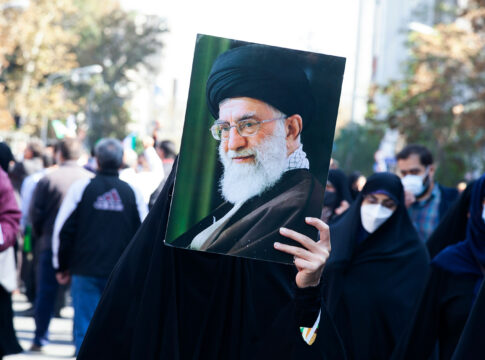
As Iran stages a lavish farewell for Ali Khamenei, the world is really watching a regime that lost its hardline ruler to American‑Israeli airstrikes and is now fighting to control the story of his death.
Story Snapshot
- Iranian state media confirmed Khamenei was killed in joint United States–Israeli strikes on his Tehran residence, ending nearly four decades of rule.
- Tehran declared 40 days of mourning and planned multi‑city funeral events, now drawing foreign delegations to a heavily scripted farewell ceremony.
- The funeral and farewell ceremonies were delayed for months by ongoing military operations, showing how unstable the regime remains.
- Human rights reports describe Khamenei’s legacy of executions, protest killings, and harsh repression even as Iran tries to frame him as a martyr.
How Khamenei Was Killed And Why It Matters
On February 28, 2026, Ali Khamenei, Iran’s supreme leader, was killed in Tehran during coordinated airstrikes carried out by the United States and Israel against top regime figures. State and foreign reports say the attack hit his residence, with satellite imagery showing heavy damage to the compound, and Iran later confirmed he died from the strike. His death ended nearly 37 years of rule by an anti‑West, anti‑Israel hardliner who used terror and proxy forces to destabilize the Middle East. For American conservatives, this was a major blow to a leading sponsor of terrorism and a long‑time enemy of US allies.
Iran’s Supreme National Security Council and state broadcasters first denied rumors of his death, then abruptly went on air to announce he had been “martyred,” and declared a 40‑day mourning period and a seven‑day public holiday. Reports from outlets like Fars News said several close family members, including a daughter and granddaughter, were also killed in the same strikes, underlining how targeted and effective the operation was. President Donald Trump and Israeli Prime Minister Benjamin Netanyahu both publicly described the mission as a successful strike on the head of the regime, signaling a clear message of deterrence to Tehran and its proxies.
The Delayed Funeral And Today’s Farewell Ceremony
Iran had initially planned to bury Khamenei in March, but the regime postponed major funeral events because fighting with the United States and Israel continued and security could not be guaranteed. Only in mid‑June did state media announce final funeral dates, setting processions to begin in Tehran on July 4, move to the religious center of Qom on July 7, and end with burial at the Imam Reza shrine in Mashhad on July 9. The current farewell ceremony in Tehran is part of this multi‑day plan, drawing delegations from friendly or dependent states, many of whom rely on Iran’s money, weapons, or energy deals.
Coverage from regional and Western outlets shows large crowds in Tehran’s prayer complex, coffins of Khamenei and family members on display, and officials using heavy religious language to cast him as a heroic martyr killed by foreign “aggression.” Yet some reports note that many Iranians who suffered under his rule are not in those crowds, and that in past weeks opposition figures have quietly welcomed his death and hoped it might open space for change. The regime’s tight control of media and internet access means critical voices are largely off camera, even as state television beams images of mourning to the world.
Human Rights Record Behind The Mourning Narrative
While Iran’s leaders talk about martyrdom, human rights reporting paints a far darker picture of Khamenei’s long time in power. The United States State Department and groups like Amnesty International document years of mass executions, torture, and violent crackdowns on protests, including recent waves of killings during demonstrations that called for the end of the Islamic Republic. Analysts estimate thousands of protesters and dissidents died under his watch, with authorities using the death penalty and political prisons as tools to intimidate the public and crush any push for freedom. For Americans who care about religious liberty, women’s rights, and free speech, these reports show why many see his death as justice rather than tragedy.
The coffins of Ali Khamenei and members of his family have been placed on public display ahead of a mass farewell ceremony in Tehran.
Large crowds are expected to attend the ceremony, with mourners gathering to pay their final respects before the funeral proceedings. Authorities… pic.twitter.com/vzftuGkSFp
— Pakistan Economic Network (@NetPakistan) July 3, 2026
Experts note that authoritarian systems often try to turn battlefield losses into propaganda wins, and Iran is following that pattern by framing Khamenei’s death as a sacred sacrifice and blaming unrest on foreign plots. Regime‑linked media and far‑left foreign supporters echo talking points that protests were “foreign‑backed riots,” trying to hide the scale of domestic anger and to justify brutal crackdowns. At the same time, institutional silence from neutral bodies about the exact forensic details of Khamenei’s death lets Tehran push its own framing unchecked, even though the basic fact of his killing in United States–Israeli strikes is accepted across mainstream outlets.
What Comes Next For Iran And Why Americans Should Watch
Iran has announced that Mojtaba Khamenei, Ali’s son, is poised to become the next supreme leader, keeping power inside the same hardline family circle. Analysts expect intense infighting among factions but agree that security forces, courts, state media, and religious bodies are still controlled by hardliners loyal to the system Ali Khamenei built. That means the regime is likely to double down on repression at home and support for proxy militias abroad, even while it parades foreign guests through today’s farewell ceremony. For American conservatives, this moment underlines the need for strong borders, energy independence, and a clear‑eyed foreign policy that treats Tehran as what it is: a hostile theocratic regime, not a partner for peace.
Sources:
youtube.com, bbc.com, en.wikipedia.org, axios.com, instagram.com, facebook.com, nbcnews.com, isdglobal.org, us.dk, hudson.org, amnesty.org