
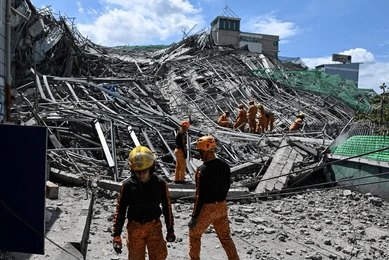
Venezuela’s twin earthquakes exposed how fast a major disaster can turn into a battle over facts, damage, and trust.
Quick Take
- Venezuela’s acting president said the quakes killed **32** people and injured more than **700**.
- The United States Geological Survey said the back-to-back quakes measured **7.2** and **7.5** and hit within about a minute.
- Reports said buildings collapsed in Caracas and La Guaira, and the main airport was closed after ceiling damage.
- USGS modeling warned the event could produce far higher losses than the first official toll showed.
Damage Hits Homes, Businesses, and the Main Airport
Venezuela’s acting president, Delcy Rodríguez, said the twin earthquakes caused 32 deaths and more than 700 injuries. The quakes struck on Wednesday evening near Morón on the country’s Caribbean coast, and officials said the hardest-hit areas included Trujillo, Carabobo, Miranda, and La Guaira. Reports from local and international outlets described collapsed buildings, dust clouds, and frightened residents fleeing into the streets.[2][4]
The damage reached key infrastructure fast. One report said the Simon Bolívar International Airport closed after part of its ceiling collapsed, a sign that the shockwave hit more than homes and shops. That matters because airport closures slow rescue work, medical travel, and supply deliveries. In a country already under strain, even short disruptions can make recovery much harder for ordinary families and first responders.[2]
What the Seismic Data Shows
The United States Geological Survey said the first quake measured 7.2 and the second 7.5. Reuters reported that the second quake struck less than a minute after the first, and other reporting put the gap at about 39 seconds. The first quake was centered west of Morón, with the second following nearby. The timing and size explain why panic spread so quickly across the capital and surrounding states.[2][4]
USGS modeling also warned of much worse outcomes than the first official count suggested. One report said the agency’s early estimates pointed to possible deaths in the thousands or even tens of thousands, depending on what rescue teams found in collapsed structures. That kind of projection is not a final count, but it does show why early casualty numbers in major quakes often change as crews reach damaged areas.[1]
Why the Toll May Keep Changing
The gap between the official count and the worst-case models is the core story here. Rodríguez gave the first public total early in the response, but rescue teams were still searching rubble and reaching remote areas. That means the number could rise, or the early total could hold if damage proves less deadly than feared. Either way, the public is left with incomplete information while rumors and dramatic claims spread fast.[1][2]
🙏 Please keep the people of Venezuela and all those affected by recent earthquakes in your prayers this morning.
Two powerful back-to-back earthquakes struck western Venezuela yesterday — a 7.2 magnitude followed just seconds later by a 7.5 magnitude near Yumare. The quakes…
— Louisa 👑⚔️ (@mysunshinelu) June 25, 2026
For conservative readers, this is another reminder that bad infrastructure and weak institutions carry a real human cost. When governments mismanage public systems, people pay the price in broken roads, weak buildings, and slow emergency response. This earthquake also shows why clear reporting matters. Families need facts, not inflated claims, political spin, or panic-driven chatter when lives, property, and basic order are on the line.[1][2]
Sources:
[1] Web – Venezuela twin earthquakes kill at least 32, injure more than 700
[2] Web – At least 32 killed, 700 injured in 2 major earthquakes in Venezuela …
[4] YouTube – 7.2 & 7.5 Twin Quakes Kill Many, Rescue Ops Underway in Caracas