
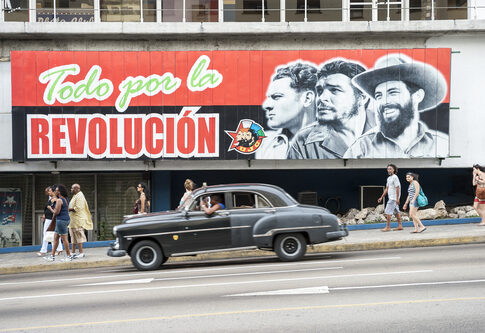
As Cuba scrambles to save its collapsing socialist economy with “free‑market” reforms, Americans get a fresh warning about where big government control leads when it finally runs out of other people’s money.
Story Snapshot
- Cuba just approved nearly 200 “historic” free‑market reforms to rescue its failing socialist economy.
- Havana will now allow large private companies, private banks, and foreign investors without state joint ventures.[1][2]
- Economists warn past Cuban reforms were too timid and tightly controlled to fix deep structural problems.[11][12]
- The crisis shows what happens when a command economy crushes free enterprise for decades.[7][21]
Cuba’s Rulers Admit Socialism Is Broke
Cuban lawmakers have now approved nearly 200 free‑market reforms as the island edges toward economic collapse.[1] In a major speech to the National Assembly, Prime Minister Manuel Marrero listed 176 measures to shrink the state’s direct grip on the economy and lure investment into banking, tourism, farming, and more.[1][2] The regime is still calling this “socialism,” but the message is clear. After decades of central planning, they need private business and capital to keep basic life from breaking down.
The new rules let foreign investors come in without being forced into joint ventures with the state, and they even allow large private companies for the first time.[1][2][3] Cubans and foreigners will be able to buy stakes in state companies, turning pieces of the old socialist apparatus into share‑holding businesses.[3] Officials say they want to cut price controls that helped drive shortages and inflation, and they promise more autonomy for local governments and state firms.[5] In plain terms, Havana is copying enough market ideas to stay afloat while still guarding its one‑party rule.
What the “Free‑Market” Reforms Really Change
The reform package opens far more space for private activity than Cuba allowed for most of the last 60 years. People will be allowed to own their own companies, employ more than 100 workers, and even run private banks.[2][6] Farmers are promised access to foreign currency and direct imports of materials without state middlemen, something unthinkable under classic socialism.[5] Foreign companies can now invest directly in private businesses, not just state‑run joint ventures.[5] On paper, this looks like a big step toward the kind of mixed economy seen in other post‑socialist states.
But past experience shows the regime often gives with one hand and takes back with the other. Research on earlier reform waves under Raúl Castro found that small private businesses and cooperatives grew but always under heavy limits and red tape.[4][7] State ownership and central planning still dominate, and new private actors face shifting rules, weak property protections, and the constant threat of political intervention.[4][14] Even now, leaders stress these measures are meant to “update” socialism, not surrender political control.[3][12] That is a key warning sign for investors and for Cubans who want true economic freedom.
Why Many Experts Say It Still May Not Be Enough
Independent economists who study Cuba say reforms like this often arrive late, move slowly, and stop short of real liberalization. Years ago, prominent Cuban economists already warned that earlier market changes were “insufficient” to spark real growth and remained chained to a Soviet‑style command system.[11] Outside studies point out that while Cuba has widened space for private work since the 1990s, the state keeps tight control over trade, key industries, and finance.[5][7] This pattern makes it hard for markets to work and for outside capital to trust long‑term commitments.
Looks like #Cuba saw what happened to Venezuela and Iran and chose to reform their country with free-market policies. https://t.co/YDth67ZlPn
— James Anderson | FIRE Acceleration (@JamesAnderson88) June 19, 2026
Other socialist systems show the same cycle. When a command economy runs into crisis, leaders often open just enough of the market to survive, not enough to truly unleash growth or liberty.[17][20] Analysts comparing Cuba with places like China and Vietnam argue that Havana’s reforms still lag far behind the radical shifts those countries made toward genuine market signals and private property.[12] As long as the Communist Party keeps political power first and views private success as a threat, there is a real risk these reforms will stall or even be rolled back when pressure eases.
Lessons for Americans Watching from Trump’s America
For American readers, Cuba’s U‑turn tells a simple story. A government that promised cradle‑to‑grave security crushed free enterprise, choked off profit, and tried to plan almost everything from the top down.[9][21] For years, Western elites and campus radicals praised Cuba’s “social justice” model. Now the same regime is begging private investors to rescue it from a disaster of its own making.[1][2] That is what happens when ideology beats common‑sense economics for too long and when the state believes it can outthink the market.
Under President Trump’s second term, the contrast could not be sharper. The United States remains the world’s greatest example of how private property, risk‑taking, and limited government fuel prosperity and innovation. Cuba’s crisis is a living warning against the soft‑socialist ideas still pushed by the American left, from heavy state control of energy to endless welfare expansions and attacks on small business. When politicians talk about “equity,” “planning,” and “control,” Cuba shows where that road ends: shortages, broken money, and finally a desperate rush back to the very free market they once outlawed.
Sources:
[1] Web – Cuba approves free-market reforms in effort to stave off economic …
[2] Web – Cuba approves free-market reforms in effort to stave off economic …
[3] Web – Cuba unveils 200 historic free-market reforms amid economic pressure …
[4] Web – Cuba approves economic reforms amid US pressure
[5] Web – Cuba adopts historic package of free-market reforms
[6] Web – Cuba passes market-friendly market reforms amid U.S. pressure
[7] Web – Cuban PM floats sweeping reforms to privatize vast swath of economy
[9] Web – Preparing for a Free Market Cuba | The Heritage Foundation
[11] Web – Cuba’s Economic Change in Comparative Perspective E D ITE D BY
[12] Web – As Cuban economy stagnates, economists press for deeper reforms
[14] Web – An Overview of the Cuban Economy, the Transformations …
[17] Web – Economic Crisis from a Socialist Perspective | Socialism & …
[20] Web – [PDF] Economic Crisis and Disillusionment from Socialism – Ran …
[21] Web – Socialist Economies in Transition – 2012 Book Archive