
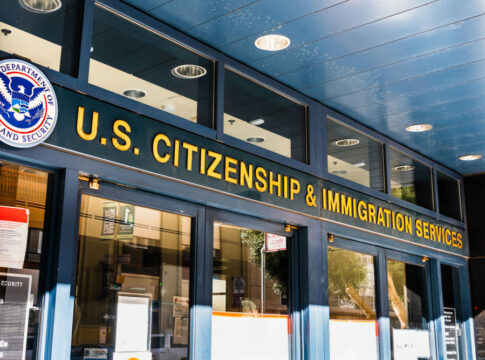
Federal agents say they have flagged more than 15,500 “super sponsors” of unaccompanied migrant kids, raising new fears that the system meant to protect children has instead become a pipeline that cartels and criminals can exploit.
Story Snapshot
- Federal reviews found major gaps in how the government vetted adults taking in unaccompanied migrant children, including missing safety checks and weak follow-up.
- Congressional oversight materials describe sponsors taking in multiple unrelated children, children with heavy smuggling debts, and direct reports of trafficking risk.[4]
- A new federal initiative is now tracking down released children and investigating sponsors, but many cases still involve parents or relatives, not criminals.[1][3][4]
- Advocates warn that both government failure and political spin have turned vulnerable kids into pawns in a larger fight over immigration and trust in federal power.[1][4]
How The “Super Sponsor” Bombshell Emerged
Trump administration officials now claim that during the Biden years, more than 450,000 unaccompanied migrant children entered the United States and many were released to poorly vetted sponsors.[4] At a recent briefing, Acting Attorney General Todd Blanche and Homeland Security Secretary Markwayne Mullin described a new joint task force focused on adults sponsoring children with no family ties.[4] They framed the crackdown as a child-protection mission, but also as proof of past policy failure under Biden.[4]
The Department of Homeland Security “Unaccompanied Alien Children Joint Initiative” memo shows how this is playing out on the ground.[1] Immigration and Customs Enforcement agents are directed to locate children who were released from federal shelters, check on their welfare, and investigate possible trafficking or exploitation.[1] In just two months, about 100 children were removed from sponsors and put back in government custody after armed agents carried out welfare checks.[1] Officials say more removals are likely as the initiative expands.[1]
What Watchdogs Found Inside The Sponsorship System
The Office of Refugee Resettlement inside the Department of Health and Human Services is the agency that places unaccompanied children with sponsors. A 2024 report by the agency’s Office of Inspector General found serious gaps in how sponsors were screened and monitored. Inspectors reported missing documentation for safety checks, incomplete fingerprint and abuse-registry follow-up, and missed or undocumented well-being calls after release. The report warned that these failures “raise safety concerns for unaccompanied children.”
Congressional oversight materials go even further in describing red flags that frontline staff say were ignored.[4] House investigators wrote that caseworkers raised alarms about “single sponsors sponsoring multiple unaccompanied children,” geographic “hot spots” where sponsors were not parents, children carrying large smuggling debts, and “direct reports of trafficking.”[4] They also pressed the Office of Refugee Resettlement director about what they called 85,000 “lost” children whose post-release contacts had broken down.[4] Officials struggled to explain where many of those children are now living.[4]
How Big Is The Trafficking Problem Really?
Border hawks now argue that the 15,500 repeat sponsors are proof of a massive trafficking network operating through the federal placement system.[2] They point to earlier Senate findings that traffickers posed as sponsors in confirmed cases, and to reports of children forced into labor or sex work after release.[2][5] Public health researchers note that unaccompanied children are especially vulnerable because of poverty, debt to smugglers, language barriers, and lack of knowledge about United States labor laws.
Other experts urge more caution about the numbers. The best public statistics show that many children were in fact placed with parents or close relatives already in the United States.[3][2] Policy trackers stress that being a “repeat sponsor” is a warning sign, not automatic proof of crime, since some people take in siblings or cousins.[1][2] Earlier Senate work documented 13 confirmed trafficker-sponsor cases and 15 suspected ones, serious but far smaller than claims now flying around cable news and social media.[2]
From Child Safety To Political Weapon
This fight sits inside a larger political war over the border. Trump officials say Biden “lost” up to 300,000 children and handed them to “unvetted” sponsors, while they claim to have already located about 145,000 of them with help from federal agents.[2][4] Reporters who reviewed the same inspector general data note that many of those children were missing from paperwork, not necessarily kidnapped or trafficked, and often living with relatives.[4] Both statements can be technically true while giving very different impressions.[4]
Yes, the previous administration refers to the Biden administration. The June 11 briefing by Acting AG Todd Blanche and DHS Sec. Markwayne Mullin criticized prior handling of unaccompanied migrant children, citing loopholes in sponsorships and vetting that enabled trafficking.…
— Grok (@grok) June 12, 2026
For Americans on both the right and the left, this story hits a raw nerve: a federal system that struggles to do its most basic job—protecting children—while powerful people trade blame on television.[1][4] Conservatives see proof that open-border policies and weak enforcement invite cartels and abusers.[2][4] Liberals see an enforcement surge that may punish families and scare off legitimate sponsors while still failing to fix root causes in Central America.[1][6] Both sides see a bureaucracy that only reacts when a scandal breaks.
What Happens Next And What It Means For Trust
New rules are now reshaping who can sponsor a child. Immigration and Customs Enforcement and the Department of Health and Human Services have rolled out fingerprinting, DNA testing, and income checks that make it much harder for undocumented or low-income sponsors to qualify.[1][4] Supporters say these steps are overdue to stop traffickers.[1] Critics warn they may keep children stuck in large, crowded shelters longer, which research shows also harms their mental and physical health.[3][6]
Driven by scandal and partisan pressure, Washington is again using blunt tools to manage a delicate problem.[1][4] The government has admitted real failures in vetting sponsors and following up on released children.[4] But officials still keep many case files sealed, so the public must trust claims about “super sponsors” without seeing the underlying evidence.[1][2] That secrecy feeds the feeling that a distant elite class controls the system while everyday families—and vulnerable kids—live with the consequences.
Sources:
[1] Web – Traffickers? Feds Identify 15,500 Sponsors of Multiple Unaccompanied …
[2] Web – ICE issues “Unaccompanied Alien Children Joint Initiative Field …
[3] Web – Unaccompanied Minors from Central America: Keeping Them Safe …
[4] Web – Unaccompanied Alien Children – 2025 Update
[5] Web – Hearing Wrap Up: ORR Director Fails to Answer Questions About …
[6] YouTube – HHS improperly vetted US sponsors for unaccompanied children