
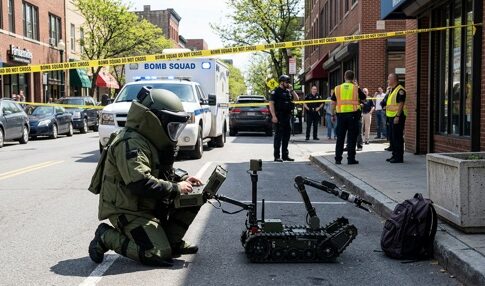
A suspicious package forced the evacuation of a major U.S. military hospital in Japan—proof that even routine medical care for our troops now runs through a security minefield.
Evacuation Disrupts Care at a Key U.S. Facility Overseas
U.S. Naval Hospital Yokosuka, located at Yokosuka Naval Base south of Tokyo, evacuated its immediate area around 8:33 a.m. local time Thursday after a report of a suspicious package. Hospital leaders stopped routine patient services out of caution, canceling appointments and directing people away from the affected area. The incident touched a facility that supports America’s forward-deployed presence in the Indo-Pacific, including U.S. 7th Fleet sailors and their families.
Hospital updates posted later in the morning confirmed the disruption was broad, not symbolic. A public message stated that patient services were halted due to “facility concerns,” with all appointments canceled while the situation was investigated. Emergency care continued, but the emergency room was relocated to a nearby building to keep services available without exposing patients and staff to a potential hazard. That kind of continuity matters when families are far from home and depend on base medical care.
Hazmat Response and a Tight Perimeter Show How Seriously Bases Treat Unknown Threats
First responders in hazmat suits established a perimeter reported at roughly 500 feet as the response unfolded. By early afternoon, an incident command center was operating in a parking lot, and decontamination activity was observed as part of standard protocols used when an unknown substance might be involved. The visible show of force protection is not theater; it is the military’s sober answer to uncertainty, especially at facilities that must remain operational in a tense region.
Base spokesman Justin Keller later confirmed the package was not a threat and thanked first responders for their work. An all-clear was issued at about 4 p.m. local time, according to the available reporting, and the hospital signaled it would resume normal operations the following day. A later hospital update said routine services would restart Friday, with the emergency room expected to return to its normal location by morning and patients receiving guidance on rescheduling.
NCIS Investigation Continues, Even After the “All Clear”
The Naval Criminal Investigative Service is leading the investigation, a reminder that “no threat” does not mean “no accountability.” Investigators typically work to determine how the package arrived, who handled it, and whether it was an innocent mistake, a hoax, or a probing attempt to test security. Public reporting did not identify the package’s origin or any suspect, and no injuries or illnesses were reported during this Yokosuka incident.
Why Yokosuka Security Incidents Get Attention Beyond the Base Fence
Yokosuka is not just another overseas installation; it is a strategic hub supporting major U.S. naval operations in the Asia-Pacific. Any suspected hazard at a military hospital there can ripple through readiness because the facility serves a large beneficiary population and helps keep forces medically prepared. Background reporting notes that the hospital is the largest U.S. military hospital in the Asia-Pacific region, serving tens of thousands of beneficiaries tied to deployed forces, families, and partners.
Security procedures for suspicious items have hardened over decades, especially after 9/11, with strict mail screening and “abundance of caution” responses designed to prevent the unthinkable. The event also sits alongside a pattern seen at other U.S. installations, where suspicious packages sometimes turn out to be non-threatening after evacuations and tests. Limited public details are available so far about what, specifically, triggered the alert at Yokosuka, beyond the initial report and the subsequent all-clear.
What the Public Knows—and What Still Isn’t Confirmed
Officials have been clear on the core timeline: the report came in during the morning, services paused, emergency care moved, and the all-clear followed in the late afternoon. What remains unclear is whether the package was tied to routine logistics, misdirected mail, or something deliberately designed to alarm personnel. That uncertainty is exactly why investigations continue after the hazard tape comes down—because deterrence depends on finding out who is responsible and closing any gaps.
For Americans watching from home in 2026, the takeaway is straightforward: the military’s overseas footprint depends on secure, uninterrupted support services, and medical facilities are not immune to the same kinds of disruptions that have hit bases stateside. When threats—real or hoaxed—force evacuations and cancel care, commanders are left balancing force protection with mission readiness. Thursday’s quick resolution is good news, but the need for vigilance is the real headline.
Sources:
Suspicious package prompts evacuation of US naval hospital in Japan
U.S. Navy Medicine Photo (USNH Yokosuka-related imagery)
Suspicious package at US military base sickens several, triggers evacuation