
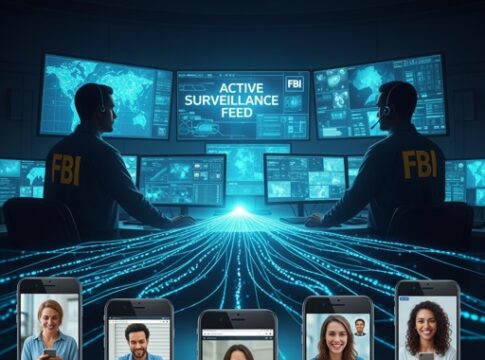
The FBI confirmed to the Senate it continues purchasing location data on American citizens, bypassing the Fourth Amendment by simply buying what it cannot legally seize.
The Digital Surveillance Marketplace
The FBI’s confirmation that it purchases location data should alarm anyone who values constitutional protections. The bureau found a workaround to Carpenter v. United States, which established that law enforcement needs a warrant to obtain location data from mobile networks. Instead of requesting data from carriers, federal agencies simply buy it from the same data brokers that fuel the online advertising industry. This practice transforms your Fourth Amendment right against unreasonable searches into a commodity available to the highest bidder.
Kash Patel refused to deny that the FBI is buying up Americans' location data. This is a shocking end run around the 4th amendment and exactly why we need to pass real privacy reforms NOW. https://t.co/E9pyHycpqV
— Ron Wyden (@RonWyden) March 18, 2026
How Your Phone Betrays Your Location
Every time your phone connects to the internet, it broadcasts identifying information including IP address, device type, and GPS coordinates. This data stream, called Bidstream, powers Real Time Bidding, the mechanism where advertisers compete for your attention in milliseconds after you load a webpage. Data brokers collect this information and combine it with deterministic data like names, email addresses, and income levels that users voluntarily provide to platforms. The result is detailed profiles that track your movements throughout the day.
The scale of this data collection is staggering. In 2018, French regulators discovered that Vectaury, an ad sales intermediary, had built a database containing personal data of 67.6 million people without proper consent. Banks are now exploring opportunities to license anonymized customer data to these same brokers. Once your data enters this ecosystem, opting out becomes nearly impossible, and destroying data already in circulation is even harder.
Federal Agencies Shopping for Surveillance
Immigration and Customs Enforcement purchased access to Penlink’s Tangles and Webloc tools, which surveil large numbers of people simultaneously. Webloc can identify smartphones in a specific area and time, then track them throughout the day back to their homes at night. Penlink describes its system as analyzing location information from endless digital channels, accessing commercially available smartphone location data from third-party brokers. The system pulls together data from multiple sources, including social media, enabling what investigators call warrantless device tracking.
ICE is not alone in this marketplace. The Department of Homeland Security, Customs and Border Protection, Secret Service, and Internal Revenue Service have all purchased location data from brokers. The surveillance extends beyond government use. Anti-abortion groups purchased similar data to target people visiting Planned Parenthood clinics, demonstrating how this information can be weaponized by any organization with sufficient funds. The common thread is simple: no warrants, no judicial oversight, just cash transactions.
The Constitutional Loophole Nobody Closed
The Fourth Amendment protects Americans from unreasonable searches and seizures made without probable cause. However, legal scholars note the amendment does not regulate open market transactions. Aaron X Sobel described the practice as end-running warrants in the Yale Law and Policy Review, urging legislators to close this loophole. The Electronic Frontier Foundation supports the Fourth Amendment is Not For Sale Act, proposed legislation that would address this gap in constitutional protections.
The likelihood of such legislation passing remains slim. Even if Congress acted, it would not address the fundamental problem of the advertising technology industry vacuuming up massive amounts of personal information. These companies, many unknown to the public, possess enough data to reconstruct anyone’s daily movements. The real scandal is not just that government agencies have this access, but that private entities collect and sell this information with virtually no oversight. When your constitutional rights can be nullified by a commercial transaction, something has gone profoundly wrong with both technology and law.