
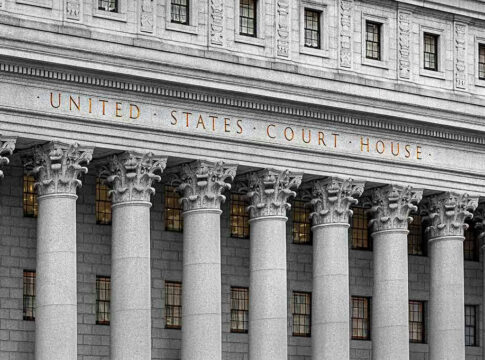
A Utah judge just told the accused assassin of Charlie Kirk that his bid to hide key court proceedings from the public is over—and that sunlight, not secrecy, will govern this case.
Story Highlights
- Judge Tony Graf Jr. refused to close the upcoming preliminary hearing for Tyler Robinson, keeping cameras and media access in place.[3]
- The court found Robinson’s secrecy request too vague and not backed by concrete proof that publicity would destroy his chance at a fair trial.[3]
- The judge reaffirmed that the public and press have a presumptive right to watch criminal proceedings, even in politically explosive cases.[3]
- At the same time, the court ordered a separate hearing to examine whether prosecutors violated a gag order with comments about ballistics evidence.[1][3]
Judge Rejects Push to Seal Hearings in High-Profile Kirk Case
Fourth District Judge Tony Graf Jr. ruled that the preliminary hearing for Tyler Robinson, the man accused of shooting and killing conservative leader Charlie Kirk, will remain open to the public and media coverage.[3] Robinson’s attorneys had asked the court to close parts of that hearing and seal exhibits, claiming graphic evidence and investigative summaries would poison potential jurors before any trial.[1][3] Judge Graf rejected that request, saying Robinson’s team had not shown a realistic likelihood that openness would prejudice his right to a fair trial.[3]
According to reporting on the ruling, Judge Graf emphasized that criminal courts in the United States operate under a strong presumption of openness, and that preliminary hearings are no exception.[3] He said the public and media enjoy a presumptive right to access such proceedings, and any party seeking closure must carry the burden of showing that transparency would meaningfully threaten a fair and impartial jury.[3] In this case, he concluded, the defense offered only generalized fears about publicity rather than specific evidence of concrete, unavoidable harm.[3]
Defense Secrecy Arguments Collide with Transparency Tradition
Robinson’s lawyers argued that the upcoming preliminary hearing could feature hearsay, police summaries, expert reports, and graphic videos that might never be shown to the eventual trial jury, yet would still saturate the local community if broadcast publicly.[1] They warned that exposing Discord messages, text threads, surveillance footage, and a reported handwritten note risked inflaming emotions in Utah County, where jurors will be drawn, and requested that volatile materials be sealed or shown only in a closed courtroom session.[1]
Judge Graf responded that the defense failed to identify which specific testimony or exhibits demanded closure and how each item would create a serious risk of prejudice.[3] Reports on the ruling state that he viewed the motion as too broad and not narrowly tailored, a crucial requirement under constitutional standards for restricting public access.[3] He also noted that some of the information the defense wanted to shield had already appeared in charging documents and earlier coverage, weakening the argument that courtroom openness alone would taint the pool of potential jurors beyond repair.[1][3]
Court Favors Targeted Limits and Strong Jury-Screening Tools
Instead of embracing secrecy, Judge Graf pointed to practical tools that respect both constitutional transparency and the defendant’s fair-trial rights.[3] He said that rather than closing the hearing, the court could enlarge the jury pool, use detailed juror questionnaires, and conduct thorough questioning of prospective jurors to weed out bias.[3] Those techniques, he explained, are less restrictive alternatives that American courts regularly use in high-profile cases, and they undercut the claim that only sealed hearings can protect justice.[3]
While refusing to close the preliminary hearing itself, the judge did acknowledge that some exhibits are highly sensitive and should not simply be dumped wholesale into the public record.[1][3] Reports say the parties agreed to restrict public access to evidentiary exhibits except as they are presented in court, meaning the public can still see and hear what happens in the courtroom but may not receive full, raw copies of every file outside that setting.[1][3] That approach keeps the process visible while limiting gratuitous spread of graphic or disputed material that could be misused online.
Gag-Order Fight: Court Demands Answers from Prosecutors
Even as he sided with media access, Judge Graf signaled concern about how both sides are handling outside publicity in this politically charged case.[1][3] He found that Robinson’s defense team presented enough initial evidence to warrant a formal evidentiary hearing on whether prosecutors violated a standing gag order with comments to national outlets about ballistics testing.[1][3] The defense claims that Utah County Attorney Jeff Gray and Deputy County Attorney Chris Ballard spoke to reporters about a contested bullet-fragment report, supposedly in violation of restrictions previously imposed on public statements.[1]
The preliminary hearing for Tyler Robinson's capital murder case will remain open to the public.
Fourth District Judge Tony Graf announced his decision Monday, denying a motion by Robinson and his defense team to close the hearing.https://t.co/uwW7KyeUd4
— KSL NewsRadio (@kslnewsradio) June 1, 2026
According to accounts of the ruling, the judge scheduled a June 12 evidentiary hearing where both sides will present testimony and documents on the alleged gag-order breach.[1][2][3] That hearing will examine whether any statements to outlets like Fox News or other national media crossed ethical or legal lines and, if so, whether contempt sanctions are appropriate.[1][3] The court’s decision to keep proceedings open while still probing potential misconduct underscores that transparency and accountability run in both directions: the public gets to see what happens, and officials who seek the spotlight remain answerable for how they use it.
Sources:
[1] Web – Accused Charlie Kirk Assassin Tyler Robinson Wants Secrecy – the Court …
[2] Web – Tyler Robinson asks for more secret hearings after losing fight over …
[3] YouTube – Judge rules Tyler Robinson court hearing will remain open to the …