
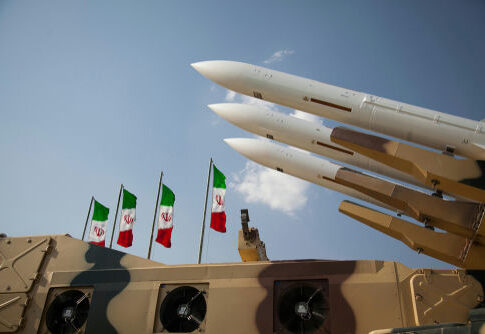
Seven American soldiers dead, approximately 140 wounded, and a war barely a week old—this is what direct confrontation with Iran looks like when the gloves finally come off.
When Retaliation Becomes Reality
The Pentagon confirmed on March 8, 2026, that a seventh U.S. Army soldier died from wounds sustained during Iran’s March 1 assault on Prince Sultan Air Base in Saudi Arabia. Six other soldiers had already perished that same day when Iranian drones obliterated a command center at a Kuwaiti port. These weren’t isolated incidents or accidents—they represented Tehran’s calculated answer to Operation Epic Fury, the massive U.S.-Israeli air campaign that launched February 28 against Iranian military targets. The human toll continues mounting while major combat operations persist across the region.
The Price of Forward Positioning
Prince Sultan Air Base sits roughly 70 miles southeast of Riyadh, serving as a critical hub for U.S. air operations throughout the Middle East. Iranian missiles and drones struck with devastating precision on March 1, damaging five U.S. Air Force refueling aircraft and wounding personnel stationed there. The attack demonstrated Iran’s capacity to reach deep into Saudi territory despite the kingdom’s sophisticated air defenses. Two days later, Iranian drones hit the U.S. embassy in Riyadh itself, causing fire damage but mercifully only material losses. These strikes reveal an uncomfortable truth: forward-deployed American forces make tempting targets when adversaries decide restraint no longer serves their interests.
Casualty Figures Tell Competing Stories
The Pentagon reports approximately 140 service members wounded across all operations, with eight bearing serious injuries. The specific breakdown between Saudi Arabia and Kuwait attacks remains unclear in official statements, though sources indicate roughly ten Americans sustained injuries at Prince Sultan Air Base alone. Six soldiers died immediately in the Kuwait drone strike, while the seventh succumbed to wounds from the Saudi attack a week later. President Trump attended the dignified transfer ceremony at Dover Air Force Base to honor the first six fallen soldiers. These numbers matter because they represent actual American families devastated by a conflict most citizens barely understand, fighting an enemy we’ve avoided directly confronting for decades.
Strategic Calculations and Uncomfortable Questions
U.S. Central Command confirmed major combat operations continue even as casualty figures climb. Israel has struck more than 140 targets in single days, destroying Iranian Revolutionary Guard air force headquarters in Tehran along with ballistic missile command centers and drone facilities. The United Kingdom authorized defensive operations against Iranian missile sites, citing collective defense obligations. Global markets have rattled, air travel faces disruption, and Iran’s leadership stands weakened according to military assessments. But here’s the question that demands answering: what constitutes victory when American soldiers keep dying on foreign soil defending bases in countries that hedge their regional bets? The strategic value of maintaining these forward positions must justify the blood price, or we’re simply feeding brave men and women into a meat grinder that serves unclear national interests.
Regional Spillover Nobody Discusses
The conflict has already killed civilians beyond the primary combatants. A 29-year-old woman died in Bahrain with eight others injured. Six foreign nationals perished in the United Arab Emirates. These casualties rarely make headlines, yet they illustrate how quickly regional conflicts metastasize beyond military targets. The Persian Gulf region’s strategic importance for global energy markets means this fighting affects everyone who drives a car or heats a home, whether they realize it or not. Iran’s attacks on U.S. installations in Saudi Arabia and Kuwait weren’t just military operations—they were messages to every Gulf state hosting American forces about the costs of that partnership when tensions escalate to open warfare.
The Accountability Deficit
Operation Epic Fury began February 28 with joint U.S.-Israeli strikes against Iran. Within 72 hours, seven Americans were dead or mortally wounded, critical military infrastructure lay damaged, and a regional war showed every sign of expanding rather than concluding. The Israeli military destroyed command centers and called operations successful. U.S. Central Command emphasizes ongoing major combat operations. Yet American families bury soldiers killed in countries most couldn’t locate on a map, defending interests that remain maddeningly abstract to ordinary citizens. The fundamental question persists: who authorized this escalation, what strategic objective justifies these casualties, and when does Congress actually debate whether American forces should fight another Middle Eastern war? Until those answers emerge clearly and publicly, these deaths represent policy failure dressed up as operational necessity.
Sources:
Fortune – Seventh Army Soldier Dies from Iranian Attack in Saudi Arabia
KTUL – US Service Member Dies After Iranian Attack in Saudi Arabia
Fox San Antonio – US Service Member Dies After Iranian Attack in Saudi Arabia
Stars and Stripes – Bases Damaged in Iran Attacks
Al Mayadeen English – Iranian Strike Damages Five US Refueling Aircraft at Saudi Base
Wikipedia – 2026 Iranian Strikes on Saudi Arabia