
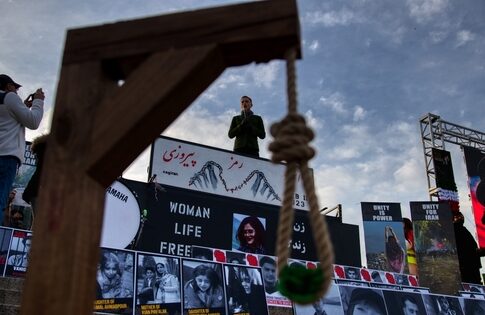
A Pakistani court’s decision to press ahead with the execution of two convicted gang rapists highlights both the horror of the crime and the global struggle to deliver real justice for victims in an age of rising lawlessness.
Story Snapshot
- Pakistan’s Lahore High Court has upheld death sentences for two men who gang raped a stranded French mother in front of her children on a motorway near Lahore.
- An anti-terrorism court had already sentenced both men to death, plus long prison terms for kidnapping, robbery, and related crimes in March 2021.[1][3][4]
- The 2020 attack shocked Pakistan, triggered nationwide protests, and fueled demands for harsher punishment of rapists.[3][5]
- The case exposes how weak policing, soft-on-crime systems, and political excuses endanger families everywhere when predators believe there will be no consequences.
Brutal motorway attack that shocked a nation
On the night of September 9, 2020, a French woman traveling with her two young children along the Lahore–Sialkot Motorway in Pakistan ran out of fuel and stopped, expecting help, not horror.[1][3] According to prosecutors, two men, Abid Ali and Shafqat Ali (also known as Bagga), broke the car window, dragged her out at gunpoint, and raped her in front of her children on the roadside near Lahore.[1][3][5] The woman was also robbed and injured during the ordeal.[1][3] News of the attack sparked outrage, not only because of its brutality, but because it happened on a major highway where any family might reasonably feel safe.[3][5]
Pakistani media and international outlets reported that the crime quickly became known simply as the “motorway rape case,” a symbol of how vulnerable ordinary people had become in the face of brazen criminals.[3][5] Streets filled with protesters demanding harsh punishment and real reforms as anger boiled over at yet another case where a woman’s dignity and a family’s safety were shattered.[3][5] Many citizens demanded the rapists be hanged, reflecting a deep desire for deterrence in a system widely viewed as too soft and too slow.[4][5] The public mood was clear: people were tired of excuses and wanted results.
Anti-terrorism court hands down death sentences
In March 2021, an anti-terrorism court in Lahore concluded the prosecution had proven its case and sentenced both Abid Ali and Shafqat Ali to death for gang rape under Pakistan’s penal code.[1][3][4] The court also convicted them of kidnapping, robbery, and terrorism-related offenses, imposing life imprisonment for abduction and additional 14-year sentences for robbery, plus fines and other penalties.[1][3] The judge wrote that raping a mother in front of her children made an already heinous crime even more shocking and demanded that such men be dealt with “iron hand.”[1] Under Pakistani law, rape can be punished by death or by lengthy imprisonment, especially when aggravated by circumstances like armed assault and kidnapping.[3]
The court’s written verdict emphasized that the attack had terrorized the public, justifying use of the country’s anti-terrorism framework.[1][3] Prosecutors argued that the savagery of the assault on a busy motorway, the use of weapons, and the trauma inflicted on the children all contributed to widespread fear.[1][3] In addition to death sentences, the court ordered the men’s property confiscated and directed that monetary compensation be paid to the victim for her injuries.[1] Even then, the judgment noted that executions could not proceed until the Lahore High Court confirmed the sentences, reflecting a two-step process similar to capital cases elsewhere.[1][5]
Lahore High Court upholds convictions and clears the way for executions
Appeals followed, as death row convicts Abid Ali and Shafqat Ali challenged both their convictions and death sentences before the Lahore High Court.[5][6] A two-judge bench was assigned to hear their jail appeals, which targeted the March 20, 2021 anti-terrorism court ruling.[5] After hearings in which the defense sought to overturn the verdicts, the High Court ultimately dismissed the appeals and upheld the death sentences, leaving the original punishments intact.[4][5][6] Reporting on the decision makes clear that the bench accepted the lower court’s findings that the prosecution had sufficiently established guilt.[4][5]
Confirmed.
Lahore High Court today upheld death sentences for Abid Malhi and Shafqat Ali in the 2020 motorway gang-rape case. They were convicted of raping a French woman (of Pakistani origin) in front of her three children after her car ran out of fuel on the Sialkot-Lahore…
— Alpha Male (@ChughtaiKhan10) June 3, 2026
Publicly available coverage of the appeals does not provide a detailed, document-by-document breakdown of the defense’s arguments, nor does it show any successful challenge to the evidentiary basis of the convictions.[5][6] What the record does show is a justice system under intense scrutiny, handling a case that had become a national test of whether rapists would face real consequences.[3][4][5] For many ordinary citizens, especially parents, the High Court’s decision is seen as overdue accountability in a world where too many violent criminals walk free or cut deals, leaving families to live in fear.
What this means for justice, deterrence, and family safety
This motorway case fits a wider pattern in Pakistan where high-profile sexual violence becomes a lightning rod for public anger at crime, corruption, and weak institutions.[3][4][5] Academic work on public punishment in the country notes a recurring cycle: horrific crime, intense media attention, online campaigns demanding rapists be hanged, and political pressure on courts and police to show toughness.[4] Under Pakistani law, lawmakers have already authorized death or long prison terms for rape, especially when linked with kidnapping, weapons, or acts that spread public terror.[3][4] Yet many citizens still doubt daily enforcement, fearing that only the most publicized cases see real follow-through.
For conservative Americans watching from afar, this story is a sobering reminder that when states fail to enforce the law consistently, families everywhere pay the price. Predators thrive wherever they believe the system is distracted by ideology instead of focused on protecting women and children. Pakistan’s decision to uphold harsh sentences in this case reflects a hard lesson many nations are relearning: justice must be swift, punishment must be meaningful, and governments must prioritize the safety of ordinary citizens over the comfort of criminals. When that resolve weakens, highways, neighborhoods, and even homes become hunting grounds.
Sources:
[1] Web – Pakistan to execute 2 men who gang raped stranded, French motorist in …
[3] Web – 2020 motorway gang rape case: LHC dismisses convicts’ appeals …
[4] Web – Rape in Pakistan – Wikipedia
[5] Web – Theater of Public Punishment in Pakistan: A Discourse Analysis of …
[6] Web – Pak’s Lahore High Court upholds death sentences of two for raping …
We need to start doing this in the United States not only with Rapists but with all violent criminals!!!!!!!!!!!!!!!!!!!!!!!!