
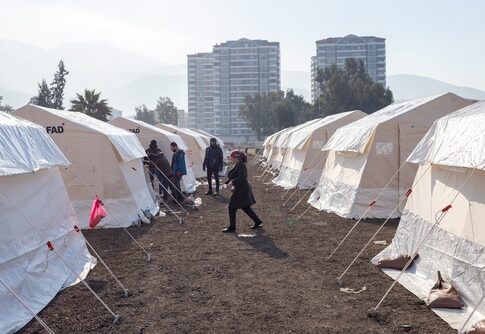
Amid a fragile ceasefire, reports say an Israeli strike hit a Gaza tent camp, killing a 6-year-old girl—while Israel says it targeted Hamas nearby—raising hard questions about truth, rules of war, and media narratives [1][7].
Conflicting Accounts After Deadly Strike On Displaced-Persons Camp
Video reports and wire coverage describe a fatal strike on a tent encampment in Khan Younis, with hospital staff receiving the bodies of a woman and a six-year-old girl and treating additional wounded civilians [7][4]. Journalists on scene framed the encampment as shelter for displaced families, heightening the civilian-cost narrative. These same reports do not present on-the-ground proof of a military target, such as weapons caches or fighters, leaving a stark evidentiary gap between casualty claims and battlefield justification [7][4].
Israeli military messaging, summarized by broadcast segments, asserts the strike sought Hamas elements in the area and was part of actions to prevent further attacks and secure armistice lines despite the ceasefire setting [1]. That claim, if substantiated, would align with legitimate wartime targeting of combatants. However, the current public record in these clips relies on paraphrases rather than full spokesman transcripts or a released after-action assessment, limiting outside scrutiny and fueling criticism from adversarial outlets [1].
Evidence Gaps Undercut Clear Judgments In A Ceasefire Environment
The available materials do not identify the munition used, the specific target nomination, the approval chain, or any precautions taken prior to the strike, such as warnings or evacuation measures [1]. Without those details, observers cannot test proportionality or distinction—the legal standards at the heart of civilian-harm evaluations. This vacuum invites narratives to harden along partisan lines: one side points to child casualties; the other cites necessary action against embedded militants who exploit civilian cover [1].
Additional reports emphasize that the area was a displacement camp, amplifying the moral weight of the incident and intensifying calls that the attack was unlawful or reckless [4]. Yet the same reporting does not present corroborated evidence that the encampment was free of militant presence. In recent conflicts, adversaries have used civilian locations for command nodes and weapon storage, but such claims require specific proof in each case. That proof has not been supplied in the sources provided here [1][4].
What Responsible Fact-Finding Requires Before Final Conclusions
Accountability and clarity demand specific documentation: the original military spokesman transcript, target-cell intelligence, the strike authorization record, munition identification, warnings issued, and a post-strike battle damage assessment. These items would enable a credible review of whether commanders reasonably believed a Hamas target was present and whether expected civilian harm was proportionate to the military advantage. None of those documents appear in the current reporting set [1].
This child lost his leg in the Israeli strike that targeted a tent in Khan Younis today, while in the arms of his mother, who was killed in the attack.
Palestinian blood continues to be shed before the eyes of the world. Gaza must not be left alone to face this pain. pic.twitter.com/IstyAIOuF5
— Ibrahem Alzenaty (@Ibrahem39688290) May 26, 2026
For American readers weary of media spin and politicized outrage, two truths can stand together. First, the death of any child is a human tragedy that demands sober review and, where warranted, accountability. Second, snap judgments without evidence erode due process, empower terror propaganda, and pressure allied democracies to cede self-defense. The prudent path is rigorous verification, transparent release of strike assessments, and a standard that punishes violations while preserving the right to defeat terrorist threats [1][7][4].
Sources:
[1] YouTube – Israel Strike On Khan Younis Tent Camp Kills Child And …
[4] Web – Woman, child killed, several injured in Israeli strike on displaced …
[7] YouTube – Israeli strike on Gaza tent camp kills 6-year-old girl, wounds …