
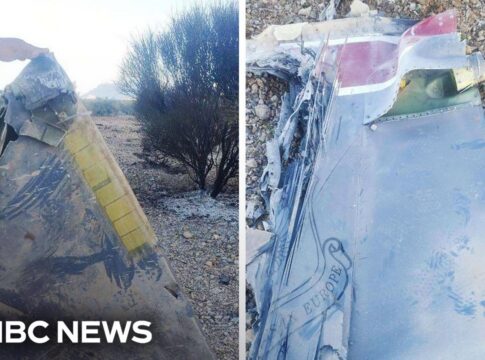
A U.S. F-15 fighter jet was brought down over Iran by a shoulder-fired missile, President Trump revealed Monday, highlighting the persistent threat posed by Tehran despite weeks of devastating American airstrikes that targeted conventional military capabilities across the Islamic Republic.
Dramatic Rescue Operations Unfold
The incident led to a dramatic 48-hour rescue mission involving more than 20 military aircraft flying at low altitudes deep into Iranian territory. The weapons systems officer, separated from his pilot after the crash, scaled cliff faces while bleeding profusely and treated his own wounds before contacting American forces. He activated a location beacon during his ordeal, triggering one of the most complex search-and-rescue operations in recent memory.
Iranian forces deployed thousands of troops to locate the downed airman, creating a race against time. The CIA launched a sophisticated deception campaign to convince Tehran that the officer had already been rescued, according to CIA Director John Ratcliffe. The operation involved coordinating with local opposition forces while keeping the airman’s true position hidden from enemy forces closing in on his location.
Mission Complications and Costs
The rescue operation hit significant obstacles when two American aircraft became stuck in sand during the extraction attempt. Military commanders executed a backup plan, bringing in replacement aircraft to complete the mission. Four aircraft in total were deliberately destroyed before U.S. forces withdrew from Iranian territory to prevent capture of sensitive equipment and technology by hostile forces.
Strategic Implications for Ground Operations
The downing of the F-15 by a simple shoulder-fired missile underscores the dangers of asymmetric warfare, where small groups or individuals can threaten advanced military forces. Trump acknowledged this reality for the first time when discussing the Strait of Hormuz situation, stating that closing the strait requires only one terrorist. This admission comes as the administration weighs options for ground troop deployments inside Iran, including potential operations to secure the Strait of Hormuz, seize oil facilities at Kharg Island, or retrieve highly enriched uranium from Iranian nuclear sites.
U.S. Central Command reports hitting more than 13,000 targets and destroying over 150 Iranian vessels during the six-week campaign. However, the successful downing of an advanced fighter jet demonstrates that neutralizing conventional military assets does not eliminate all threats. Any proposed ground operation would face similar asymmetric risks on a much larger and more sustained scale than the rescue mission.