
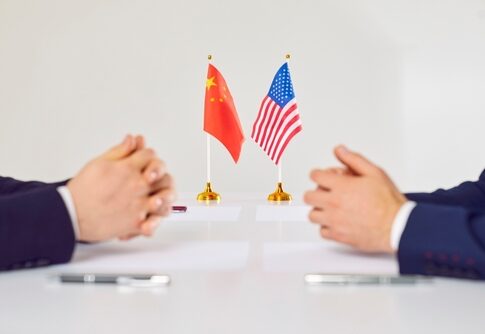
China just wrote into law the power to slam the door on money, data, and talent leaving the country—and to punish deals that cross its red lines.
Story Snapshot
- Beijing’s new outbound investment rules make national security review a core gatekeeper for overseas deals.
- The State Council can now unwind completed foreign transactions and hit investors with fines and bans.
- Ordinary Chinese residents, not just big firms, are pulled into this national security net.
- The rules double as China’s answer to Western export controls and investment screening, with built-in countermeasures.
China’s new outbound rulebook changes who really controls the exits
The new State Council regulations on outbound investment, known as Decree 837, move oversight of overseas deals from scattered ministry rules up into a single, top-level framework under the State Council itself. That shift sounds technical, but it matters. When rules sit at this level, they carry more weight in China’s legal hierarchy and can override older, looser guidance. For investors, that means the state now has a clearer, stronger legal grip on how Chinese capital moves abroad, and when it must stop.
These rules do more than fold existing approvals into one place. They embed national security logic into every stage of an outbound deal: from the first investment, through restructurings, all the way to selling or transferring overseas assets. Export controls, data rules, and security reviews no longer sit off to the side. They sit in the main lane. If a transaction might move critical technology, sensitive data, or strategic assets beyond Chinese reach, regulators now have explicit legal grounds to review, restrict, or block it.
National security review becomes a standing gate for overseas deals
Article 15 of the new regulation creates a formal national security review system for outbound investment and for later transfers of related assets, rights, and equity that affect or may affect national security. This is a major change from the previous regime, where security was one factor inside a broader economic approval run by development and commerce agencies. Now security review is its own mechanism. Organizations and individuals must assist and cooperate, cannot refuse or obstruct, and must obey the decisions made in that review.
This standing security review applies whenever an outbound investment touches national security, not just when a project looks sensitive on its face. Legal analysts point out that this gives authorities the clearest basis yet to prohibit transfers of critical technology or data, to insist on mitigation conditions, and even to order divestment of existing overseas assets if a deal later comes to be seen as risky. From a common-sense conservative lens, that mirrors what many Western governments already do with foreign investment committees, but here it targets money and know-how leaving China rather than coming in.
New powers to unwind deals and hit investors where it hurts
The sharpest edge of Decree 837 is its ability to reach back into completed transactions. Commentators note that the regulation allows China to unwind foreign deals that have already closed when they involve restricted goods, technology, services, data, or cross-border movement of key talent. That is a big deal risk. It means a contract signed last year is not fully safe if authorities now decide the exit moved sensitive assets beyond their comfort zone.
Penalties are designed to sting. For prohibited investments, fines can reach roughly half to one percent of the investment amount, with illegal gains forfeited and orders to stop activities and dispose of assets. For violations of the security review, separate provisions allow fines, mandatory fixes, one-to-three-year bans on all outbound investment activity, and forced disposal of existing investments. From a conservative viewpoint, this is classic deterrence: make the cost of ignoring national security high enough that firms think twice before chasing quick returns.
Individuals, tech talent, and foreign partners are pulled into the net
These rules do not just focus on giant state-owned firms. The investor scope is widened to cover Chinese resident individuals as formal subjects of outbound investment compliance. That brings millions of ordinary citizens—entrepreneurs, engineers, and professionals—inside the same security-driven framework that big corporations face. Overseas restructurings, licensing deals, and even personnel-driven tech transfers, such as sending experts abroad to guide projects, can now trigger review and penalties if they move restricted technology or data.
China – New Major State Council Rules Released On Outbound Investment: A New Framework That Balances Development And Security. https://t.co/G7hkxJj81p
— Conventus Anti-Corruption (@CLAntiCorrupt) June 29, 2026
Foreign governments and companies are not bystanders here. The regulation explicitly allows China to adopt countermeasures against discriminatory prohibitions or restrictions on Chinese investors imposed by other countries or international organizations. Legal notes describe this as part of a wider pattern: China is building formal tools to push back when it believes foreign laws misuse extraterritorial reach or target Chinese firms unfairly. In practice, that could mean tighter import and export measures, curbs on foreign investment into China, or controls on business cooperation with entities deemed hostile.
Why this fits a global race to weaponize money and technology
To understand Decree 837, you have to zoom out. Scholars point out that China’s policy on outbound investment has moved from an earlier “going out” phase, which pushed firms to explore global markets, into a newer phase shaped by the Belt and Road Initiative and rising security concerns. The latest rules sit squarely in this second phase. They treat outbound capital flows, technology transfers, and data as security issues rather than purely business choices, and they give the State Council tools to act accordingly.
Western governments are hardly innocent bystanders here. The United States has already built its own outbound investment screening regime, targeting American investment into Chinese or Chinese-owned firms in sectors like semiconductors, quantum technologies, and artificial intelligence. That rule can ban certain deals and require notifications for others, all on national security grounds. From a conservative, common-sense standpoint, the pattern is clear: both sides now see capital, code, and chips as part of the same arena as tanks and missiles. Decree 837 is China’s move in that larger game.
Sources:
insiderpaper.com, youtube.com, cwhkcpa.com, linkedin.com, instagram.com, x.com, english.www.gov.cn, wsj.com, morganlewis.com, hklaw.com, facebook.com