
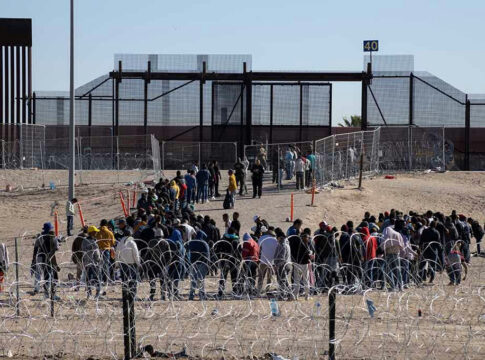
When a single army gate can turn an entire town into a cage, it shows how far raw power has drifted from basic human rights for ordinary people on both sides of the political divide.
Story Snapshot
- Israeli forces are sealing entrances to West Bank towns with new gates and checkpoints, often leaving only one guarded exit.
- Israel says these closures are needed to stop attacks and protect nearby settlers, but residents call it collective punishment.
- Hundreds of barriers now cut up the West Bank into isolated pockets, choking jobs, schools, health care, and trade.
- International bodies warn that many of these movement limits violate international law and deepen a long-running humanitarian crisis.
What exactly is happening to this West Bank town?
Israeli soldiers have closed most roads in and out of at least one West Bank town, blocking entrances with iron gates, earth mounds, and manned checkpoints. Local reports say only a single exit remains open, under heavy guard, with soldiers deciding who can pass and when. This pattern fits a wider trend since the Gaza war, where the army has added dozens of new barriers at town entrances, often with no set opening hours, leaving residents unsure if they can reach work, school, or hospitals on any given day.
Israeli officials frame these closures as part of a broader push to “root out militancy” and prevent attacks by armed groups that they say hide among civilians. Security officers argue that tight control over roads lets them watch movements, stop suspected attackers, and protect nearby Israeli settlements from shootings or bombings. At the same time, the military has declined to release full data on gate numbers or detailed threat maps, so the public only sees a rough picture based on outside counts and media reports.
Security claims versus daily life on the ground
Israel’s army insists the gates and closures are “essential for security” and rejects claims that they are designed to make Palestinian life harder. Officials say nearby settlers face real danger, and that closing town entrances is needed to keep attackers from reaching major roads or settlements. But United Nations fact sheets stress that any limits on movement must be tied to *specific* threats and used only when no softer option exists, and find many West Bank barriers unlawful under international law.
For families in the closed town, the effect is simple and harsh. Shops lose customers when traffic is forced onto distant roads, and OCHA has documented dozens of businesses and more than 150 households losing their main income after similar closures. Parents say children now spend hours at checkpoints or are blocked outright from reaching school. United States State Department reporting describes “internal closures” across the West Bank that cut wages, days worked, and access to basic services like health care. Residents describe the town as a “big prison,” fenced and gated on nearly every side.
A long pattern of barriers, annexation fears, and international pushback
These new closures sit on top of a decades-long system of control. By early 2023, United Nations field teams had mapped at least 565 fixed barriers across the West Bank, including roadblocks, checkpoints, gates, and trenches. After October 7, critics say Israel returned to a policy of “suffocating” the West Bank with checkpoints to increase visible and hidden domination, not just to answer single attacks. One Palestinian government commission now counts over 900 new barriers since that date, suggesting a rapid and large-scale expansion of control over movement.
International law experts and human-rights groups warn that these measures go beyond regular security. The International Court of Justice has already ruled that parts of Israel’s separation barrier built inside the West Bank, and its gate-and-permit system, violate international law. OCHA says the closures are a major driver of poverty and humanitarian crisis, blocking access to doctors, schools, markets, and even family and religious ties. A 2026 Amnesty report argues that tight movement limits and settler violence now work together to push Palestinians off their land and change who lives in key areas of the West Bank.
Why this matters far beyond Israel and Palestine
For many Americans, this story hits a nerve that cuts across party lines. People on the right see unaccountable global elites and permanent wars driving chaos abroad while ignoring broken borders and crime at home. People on the left see powerful states using “security” language to strip poor and marginalized people of rights, land, and dignity. In the West Bank, critics say a distant military bureaucracy now decides, gate by gate, who can work, trade, or get medical care, with almost no local voice.
📹 “This is part of Israel's escalation policy, which began with the siege and blockade of Palestinian cities and various governorates.”
Israeli forces raided the headquarters of the al-Tadamon Charitable Society in Nablus, in the occupied West Bank, and ordered its closure… pic.twitter.com/OaF2x9Gml8
— Paddystinian (@Paddystinian) July 2, 2026
That worries anyone who thinks government power should be limited and answer to the people it rules. Whether you fear deep-state control or corporate globalism, the idea of turning whole towns into walled-off zones by military order fits the picture of systems that protect the powerful while trapping ordinary families. Watching a faraway town in the West Bank turned into a fenced cage by one more “temporary” gate is a reminder: when security policy is built without transparency or clear limits, the walls rarely stop at someone else’s doorstep.
Sources:
youtube.com, npr.org, palestine-studies.org, ochaopt.org, facebook.com, state.gov, btselem.org, amnesty.org, acleddata.com
Walls come up when you can’t trust those around you.