
A tiny 18-day-old baby pulled alive from Venezuela’s earthquake rubble is inspiring the world—and reminding many Americans how often ordinary people, not governments, deliver real hope in a crisis.
Story Snapshot
- An 18-day-old baby was carried out alive from a collapsed building in La Guaira, Venezuela, after about 32 hours trapped underground.
- Verified video shows rescuers passing the baby hand to hand before reuniting the child with a tearful father, as crowds cheer around them.[1][4]
- The baby and her mother were reportedly rescued with no serious injuries, a rare bright moment amid mass death, chaos, and tens of thousands still missing.[1][3][11]
- The “miracle rescue” went viral worldwide, even as weak buildings, slow state response, and information gaps raised fresh anger at political and economic elites.[10][17][22]
What The Viral Baby-Rescue Video Actually Shows
Video from La Guaira, a hard-hit coastal city north of Caracas, shows rescue crews working at night on a mound of broken concrete and twisted metal.[1] Under floodlights, workers carefully pull out a bundled infant and lift the child above the rubble as people clap and shout with relief.[1][4] The baby is passed from hand to hand until a shirtless man, believed to be the father, hugs and kisses the child. Reporters say the infant appears awake and not badly hurt.[1][4]
The French news agency Agence France-Presse reviewed and verified the clip, which was later carried by outlets in Israel, Asia, and the United States.[1][4] A local user named Andreina Quintero, who first posted the footage on social media, said the child was 18 days old and had been trapped for about 32 hours in the collapsed building.[1] In a follow-up video from a hospital, a medical worker tells the mother the baby does not seem to have injuries, suggesting the mother shielded the child with her body.[1]
Confusion Over “Which Baby” And How Long She Was Trapped
The story grew more tangled as more “miracle baby” clips from Venezuela spread online over the weekend. One widely shared post claimed an 18-day-old baby survived 48 hours under rubble, while other reports repeated the 32-hour timeline.[2][3] Meanwhile, the United States Department of State shared different footage of American rescue teams in Venezuela pulling a nine-month-old girl and her mother from another collapsed building, calling each life saved “a victory.”[5][6] All this made it easy for viewers to mix up separate rescues and timelines.
Local and international outlets agree on some core facts. They report that an 18-day-old newborn was pulled from a collapsed building in La Guaira, apparently unharmed, and reunited with the father, with the mother rescued around an hour to ninety minutes later.[1][3][4][8] At the same time, official rescue logs released so far do not single out this specific baby by name or medical record, which feeds skeptics who warn that emotional stories often outrun hard proof right after disasters. But there is also no serious challenge yet to the authenticity of the verified video itself.[1][4]
A Miracle In The Middle Of A Man‑Made Disaster
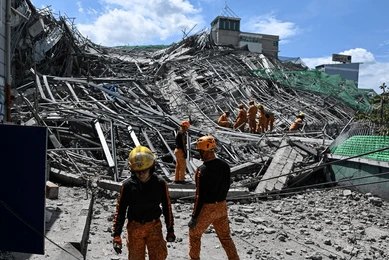
For many Venezuelans, the baby’s survival stands out against a backdrop of deep failure. Twin earthquakes tore through the country’s northern coast, flattening older, poorly built housing and turning whole blocks of La Guaira into piles of concrete.[10][17] Government numbers say hundreds to more than a thousand people are confirmed dead and thousands injured, while independent counts list over fifty thousand still missing as families dig with their bare hands.[10][11][14] Images show residents climbing unstable ruins, often without heavy equipment or enough trained teams.[15][23]
Experts have warned for years that older buildings and substandard construction in Venezuela would collapse in a strong quake, especially at night when families sleep at home.[17][22] Those warnings were widely ignored. Now, as foreign rescue units arrive from the United States, Europe, and neighboring countries, outside crews report having to work around unsafe structures, weak local planning, and spotty communications.[10][23] The result looks painfully familiar to Americans who feel their own leaders, left and right, talk a big game about “infrastructure” and “resilience” but rarely deliver when lives are on the line.
Why “Miracle” Stories Spread Faster Than The Truth
Disaster experts say hopeful rescue stories almost always go viral faster than dry official updates. Research on past earthquakes shows most survivors pulled from rubble are found within the first 24 to 48 hours, though some manage to live much longer in air pockets.[19][23] That makes a healthy baby found after about 32 hours rare but very believable. At the same time, history also shows that some early “miracle” tales get quietly corrected or even debunked days later, once hospitals, morgues, and rescue teams compare records.[19]
Newborn rescued from Venezuela earthquake rubble
A baby has been rescued alive from the rubble of a collapsed building in Venezuela, some 32 hours after twin earthquakes struck the South American country.
The rescue took place in the coastal city of La Guaira, one of the areas… pic.twitter.com/ysyJdCwHJ8
— TheCable (@thecableng) June 28, 2026
In Venezuela, that normal confusion sits on top of very low public trust. Years of economic crisis, corruption scandals, and censorship have left many people sure that both government officials and big media outlets hide or twist facts.[15][17] When citizen video appears to show a clear rescue, people on all sides are quick to share it, either to celebrate human courage or to shame slow, unprepared authorities. In that sense, the baby in the blanket becomes more than one child. She becomes a symbol of both what ordinary people can do and what the “experts” and elites keep failing to do.
What This Means For Americans Watching From Afar
Americans who see these clips from Venezuela recognize parts of their own story. Conservatives see a warning about weak borders, global supply chains, and international bodies that talk about “climate resilience” but leave real families in flimsy buildings when the ground moves. Liberals see once again how the poor and vulnerable suffer most when systems fail, and how foreign rescue teams sometimes move faster than local leaders who fear blame more than they fear losing lives. Both sides see a pattern: in crisis after crisis, regular people show up; the ruling class shows cracks.
The baby pulled from the rubble is a powerful reminder that life can win against long odds. But the harder question is why those odds were so bad in the first place. From Caracas to Washington, D.C., citizens are asking why basic building safety, honest reporting, and serious disaster planning remain optional while political branding and public-relations spin are mandatory. Until those deeper problems are faced, more “miracle videos” will keep going viral—because surviving systems, like surviving babies, will stay the exception instead of the rule.
Sources:
[1] YouTube – Baby rescued ‘against all odds’ from earthquake rubble in Venezuela
[2] Web – 18-day-old baby rescued from rubble of Venezuela quake
[3] Web – 18-Day-Old Baby Defies Death, Rescued Alive After 48 … – Instagram
[4] Web – An 18-day-old baby was rescued in La Guaira, Venezuela after she was …
[5] Web – An 18-day-old baby was rescued from the rubble of a building … – …
[6] Web – An 18-day-old baby was rescued from the rubble of a building … – …
[8] YouTube – 18-day-old baby handed to father after rescue from rubble of Venezuela …
[10] Web – Miracle in Ruins: 18-Day-Old Baby Emerges Alive From Venezuela …
[11] Web – Survival window desperately fading with nearly 50000 missing
[14] YouTube – WATCH- Miracle Survivor Pulled From Rubble In La Guaira
[15] Web – The situation has grown more desperate by the hour in Venezuela …
[17] Web – Satellite images revealed substantial damage to several areas of the …
[19] YouTube – Top 5 Miracle Rescues Offer Hope After Deadly Earthquakes
[22] Web – Understanding post-disaster population recovery patterns – PMC – NIH
[23] Web – Resilience Against Earthquakes: Some Practical Suggestions for …