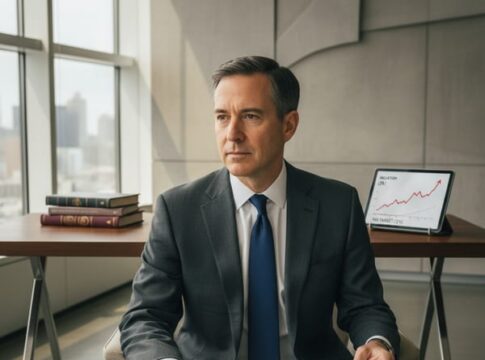
Kevin Warsh, President Trump’s nominee to chair the Federal Reserve, faces a Senate confirmation hearing Tuesday that hinges on one critical question about his independence from the White House. With inflation running at three percent—a full point above the Fed’s target—senators must determine whether Warsh will maintain Fed independence or bend to presidential pressure on interest rate decisions.
The Inflation Problem Nobody Wants to Admit
For five consecutive years, inflation has exceeded the Fed’s two percent target. Personal consumption expenditures, the Fed’s preferred inflation measure, currently stands at three percent. Fed officials attribute this persistent inflation to tariffs imposed over the past year, yet core inflation excluding volatile food and energy prices remains stubbornly elevated. Current Fed Chair Jerome Powell faces a groundless criminal inquiry from Trump’s Justice Department, complicating the confirmation process.
The Question That Changes Everything
Senator Thom Tillis of North Carolina refuses to advance Warsh’s nomination until the Justice Department investigation into Powell ends. The confirmation hearing presents senators with a straightforward test of Warsh’s independence. They should ask whether he agrees that tariffs cause the current excess inflation. If Warsh acknowledges tariff-driven inflation, he demonstrates willingness to challenge Trump’s economic narrative. If he denies tariff impacts while advocating immediate rate cuts—matching Trump’s most recent Fed nominee Stephen Miran—he signals dangerous subservience to presidential demands.
Why Fed Independence Matters Now
The Federal Reserve can ignore temporary inflationary shocks from tariffs, waiting for prices to stabilize naturally. However, if structural factors beyond tariffs drive sustained inflation above target, cutting interest rates would be reckless. Trump has consistently denied that his tariff policies contribute to inflation, creating a fundamental conflict. Warsh must choose between economic reality and political loyalty. The Iran conflict has introduced additional price pressures, making the Fed’s careful approach even more critical for economic stability.
What Senators Must Discover
Banking Committee members face extraordinary responsibility to probe Warsh’s willingness to resist presidential pressure. Trump has openly sought control over Fed policy for years, viewing Powell as an obstacle to his economic agenda. Markets, senators, and American families need assurance that the next Fed chair will prioritize price stability over political convenience. Warsh’s answer to this single question about tariff-driven inflation will reveal whether he deserves confirmation or represents Trump’s long-desired puppet at the Fed’s helm. The stakes for American monetary policy independence have never been higher.